[Expander Roll Belt Derailment Countermeasures] Achieving Zero Trouble with Crown Micro-Adjustments
- Osaka Senshoku Machinery Co., Ltd.
- Apr 27
- 3 min read
Have you ever struggled with this issue on your production line: "The flat belt rides up over the pulley flange and derails..."?
In standard products, this expander roll belt derailment is a structurally common headache. However, we are proud to say that this issue rarely occurs with our rolls. In fact, we have received almost zero complaints regarding belt drop-offs.
Why do we avoid the problems often seen in conventional products? Today, we will share the "technical dedication" behind the scenes—a slightly niche topic, but one that directly impacts the stable operation of your production floor.
The "Structural Fate" of Expander Roll Belt Derailment
First, let's unravel the mechanism behind why belts slip off in standard products. An expander roll (outer ring rotation type) is structured with a flat belt pulley attached to the end of the rubber sleeve.
The Misalignment Caused by the "Bow" The biggest challenge lies in the fact that the expander roll itself is "bowed" to expand the web. Because the entire roll is arched, the flat belt pulley attached to its end is also slightly tilted. Meanwhile, the driving flat belt attempts to run in a straight line.
Pulley: Tilted according to the bow.
Flat Belt: Trying to move straight.
This slight angular discrepancy causes the belt to slide outward across the pulley's surface, eventually overriding the flange and derailing. This is the "structural fate" that plagues many production floors.
The Industry's Dilemma: The Elusive "Horizontal Bending"
Physically, the most reliable solution is a technique called "horizontal bending." This involves bending just the pulley attachment section of the bowed shaft back to a horizontal (straight) position. If this is done, the pulley and belt become parallel, and derailment does not occur.
The Wall Preventing Theory from Becoming Reality You might think, "Then why not just do that?" However, this presents extremely high hurdles, including manufacturing equipment constraints and complex shaft strength calculations. "Understanding the theory, but being unable to implement it on an actual manufacturing line" is the reality many manufacturers face.
Resolving with "Craftsmanship": Our Unique Crown Micro-Adjustment
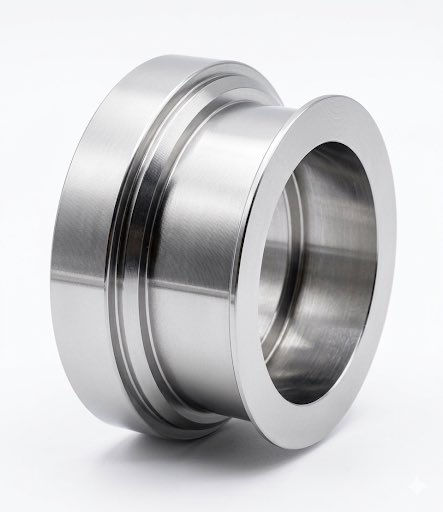
If horizontal bending isn't feasible, must we give up? Our answer at Osaka Senshoku Machinery was to "micro-adjust the crown (convex profile) of the flat belt pulley to the absolute limit."
Calculating an Exquisite Curve to Offset the Tilt The tilt of the pulley itself cannot be changed. Therefore, we hypothesized that the curve (crown) of the pulley surface where the belt makes contact could be calculated and optimized down to the sub-millimeter to match the tilt.
Based on years of experience and data, we derived an exquisite crown profile that perfectly offsets the belt's tendency to escape due to the tilt. At first glance, it may look like a normal pulley, but hidden within is a "meticulously calculated curve designed to absolutely prevent derailment."
Conclusion: What Our "Near-Zero" Complaint Track Record Proves
Since introducing this unique micro-adjustment technology, belt derailment issues with our expander rolls have decreased dramatically.
We often receive wonderful feedback such as, "Our line used to stop frequently due to the belt coming off, but since switching to your expander rolls, it hasn't happened at all." Currently, complaints regarding derailment are practically non-existent.
We didn't install special new equipment. However, "making the impossible possible through wisdom and micro-adjustments within limited constraints" is what we consider the true essence of Osaka Senshoku Machinery Co., Ltd.
If you are currently struggling with expander roll belt derailment on your line, please try the technology of the company that first domestically produced expander rolls in Japan. We strongly support your yield improvement and trouble-free stable operations.
Please feel free to consult us about your current challenges, and let us propose the optimal solution for your production floor.